Tuesday, June 8, 2010

The importance of Atatürk


  Interesting times here in Turkey. Bearing witness to the total collapse of an otherwise decent relationship with Israel has been an exhausting under taking. Keeping up with all the different sources of media, processing the information and even getting into a few fights about it in the blogesphere, has kept me busy indeed. The layers of intrigue are many. The new “Syria Turkey Iran Axis” (Horsefeathers!) Turkish charities being portrayed as terrorist organizations, “Islamists” in the AKP party and the sudden interest of those outside of Europe in Turkish affairs. Welcome to the party.

  As I’ve mentioned before, Modern Turkey is a complex place. Much of this has to do with its relatively brief history of the Republic. My hope today is to try and reveal a few things about the origins while leaving the heavy lifting up to you.

  For most Canadians, we view much of what Americans do with regard to their national symbols with a combination of envy, and suspicion. The suspicion part kicks in when Americans demonstrate a sort of patriotism that we view to be small-minded and if not somewhat delusional. “Where are their critical faculties?” “Why must kids pledge allegiance to a flag?”. “How come there are pictures of George Washington everywhere?”
Canadians, though proud and patriotic don’t buy into the symbolism of it all. It seems over done and unbecoming to us.

  So imagine then visiting Turkey for the first time and seeing a portrait of the country’s first President EVERYWHERE. Pictures of him hang in restaurants, the dry cleaners, in every public building, in my office. What’s more, people go out of their way to make sure his image is on their cell phones, on lapel pins, on their laptops. I saw at the pool the other day a young woman in her 20’s with a tattoo of Ataturk’s signature on her arm. Again, initially my gentle Canadian sensibilities were put off by what I viewed as a cult of personality.  The admiration of Atatürk starts at a young age. My daughter attends a pre-school that has had the image of Atatürk mixed into the school crafts. She’s referred to him with affection. This a little girl of 6 now a budding Kemalist. Why this reverence?? Why is it so powerful? Here’s a very brief snap shot.
 Mustafa Kemal was born in Salonica (what is now called Thesaloniki in Greece) and grew up and was educated during the declining years of the Ottoman Empire. He was a hero in the battle for Gallipoli having successfully repelled the British and the Anzac forces from the Dardanelles in their quest for conquering Istanbul. A proven leader in war, he also proved to have a gift for diplomacy and timing. During the Allied/Greek occupation of what remained of the Ottoman Empire, he and some like minds regrouped in the hinterland of central Anatolia and began what is now called the “War of Independence”. This war of independence was carried out successfully by a Turkish people that were totally exhausted and broken from the defeat in the Balkans in 1913 and defeat in the First World War. Many of the inhabitants of Anatolia died over this time period due to starvation, disease and intercommunal violence. The Allies were preparing to carve up the Ottoman Empire into colonies and mandates. This was mostly carried out as witnessed by Arabia, Palestine and other pieces being hived off to the British while the French took Syria and Lebanon. The Greeks, in an attempted reverse take over, had landed at İzmir and advanced into the Anatolian interior with British blessing. This was the environment that Mustafa Kemal managed to galvanize a people to rise up and fight for a sovereign Turkish state. Through deft diplomacy, and superior military tactics, Atatürk drove out the Greeks, defeated the Armenians in the east and played nice enough that by 1923 the new republic was established with capital in Ankara. The Allies packed up and left, satisfied with their haul of former Ottoman lands and respectful of Mustafa Kemal’s accomplishments and ablilities. Nothing in the American canon of presidential folklore even comes close to what this man was able to accomplish with such limited means.

  With the war won, this left a population of roughly 13 million people only 10% of whom were literate. Many of the settlers of Anatolia were refugees from the Balkans and other areas in the Czarist Russia and almost all were peasants. There was diverse ethnicity as well; groups of Laz, Circassians, Kurds and others were represented among the Turkish people many of whom only had religion in common. Under Mustafa Kemal’s leadership, the population was educated to the point where in 7 years, the literacy rate doubled, the Roman alphabet was introduced and the Turkish language standardized. Women, almost immediately were given the right vote. This right to vote didn’t come out of some long drawn out struggle for equality by women’s groups like in the West. Atatürk pre-empted all of that. Such was this man’s charisma that he was able to tell people how to dress. More tellingly, they listened. He ordered an end to all Muslim headgear for women and eliminated the fez for men. For him, Turkey’s future lay in the West and the hope that she would be a part of the greater human civilization. Islam was untangled from the state by the adoption of the Swiss civil code. Much of the public administration was based on the French model. The poorly enforced ban on alcohol was lifted. These steps were taken to ensure that Turkey’s future was a Western one not an Oriental one. In addition to the military victory and the rebirth of a nation, Atatürk was also responsible for a cultural revolution. The pillars of secularism were at the core of the new Turkey. This of course came with a price. Most Turks cannot read old Ottoman script, which is essentially Arabic script with a few changes. This disconnect from the past makes it challenging for modern people to learn in depth about their past though more and more, older works are being translated. A body of work that extends over 700 years of empire will take awhile.

 
  Today, because of all of these accomplishments (and more) Atatürk is revered as the father of the nation and as the starting point of pride for Turks. Throughout all of his undertakings his belief was that the Turkish people would overcome their backwardness through education. He’s been proven right. What’s been accomplished since is nothing short of miraculous given the circumstances of the beginning. Turkey is a member of the G20 (weighing in as the 17th economy in the world) has a sizable military and more recently has been flexing its diplomatic muscle, taking on a more outward looking foreign policy. There are now 81 universities in the country. Turks are immensely grateful for Atatürk’s vision of a modern secular republic. Many feel they owe everything to him. There are forces though that feel otherwise.

Observant Muslims were left out of the march toward modernity. In many ways they were shut out of public life. This changed recently with the election of the Justice and Development Party or AKP. First elected in 2002 and then re-elected in 2007, this party and their Prime Minister Erdoğan are an expression of the “outs” finally getting “in”. Underlying much of what guides this party and government is that religion (Islam) should be permitted to reassert itself in public life that it be “freed from the prison of the mosque”. This rightfully, scares the bejessuz out of the modern secular middle class Turks. They view everything that this group of politicians does with suspicion. This is where things get tricky for an outsider such as myself.

  Should a judge be able to close down a political party? My feeling immediately is no, however, in Turkey, political parties have had overtly religious objectives. In having such objectives, they violate the constitution, which characterizes Turkey as secular. If allowed to stand as a party, beyond the fear that they form a government, they could also reverse all that has been achieved in terms of modern goals. The AKP, after winning an election in 2007 with 47% of the vote, narrowly escaped closure by the Constitutional Court. Should Canada’s Supreme Court ban the Marijuana Party? Or should this one be left up to the voters?

 Should civilian authorities control the military? The answer of course is yes for most Westerners. In Turkey however, the military has long been viewed as the guardian of Atatürk’s legacy and through exerting pressure in 1997 in what’s been dubbed the coup by memorandum the military checked the rise of religious movements much to the pleasure of those who prefer a secular lifestyle. By checking the power of the military, you remove in effect an institutional barrier to religion taking over in public life.

  Should minority rights be extended to the Turkish Kurds? Again most Western observers will answer yes. What’s the big deal right? We in Canada have the province of Quebec. Quebecers have a different legal system, different language and different culture than most of the rest of Canada. What we also have is a few hundred years of wrestling with the idea of separate but equal. Canadians also had the benefit of having these discussions without an extended armed insurrection in the background.  Turks are only now beginning to have that discussion. As I mentioned earlier, an ethnically diverse population founded the Turkish republic. Assimilation was long the objective and that has largely held with Laz, Circassian and others. Kurds too have assimilated to some degree if they’ve moved away from the eastern part of the country. The “homeland” though remains Kurdish. The fear again is, and keep in mind the fate that awaited Turkey at the hands of the Allies, was the partition of the country, the creation of “two Turkeys”. More than once I’ve had someone point out the fate of Yugoslavia when discussing these issues of recognition. These are reasonable fears for the future of Turkey given the reality of the not to distant past.

The current AKP government has initiated each one of the above democratic reforms. The first two items appear on the surface to be self-serving. All however are requirements for Turkey becoming a member of the European Union. The fear is that Atatürk’s legacy will be jeopardized in the process. At the same time its difficult to see how Atatürk would have opposed such things given his desire to emulate a modern Western country. In this case, it appears the messenger is the issue not so much the ideas. The stakes are high for Turkey should the country turn in a more religious direction. A legacy squandered and a modern lifestyle banished. My sense is that these fears have been over done to some degree. I appreciate where they are coming from. Democracy has had a tricky time here in Turkey. Turks are distrustful first until proven otherwise. Having faith in the intention of public officials is even rarer here than in Canada, regrettably for good reason. The AKP hasn’t done too much to quell the concerns of their fellow secular citizens. Most recently, Tayyip Erdoğan went out of his way to bash Atatürk’s long time lieutenant Ismet Inönu, Turkey’s second president. This was what I called the “dog whistle” approach. Erdoğan cannot by law criticize Atatürk directly, so he goes through the back door critizing the second in command. There are many Turks who are dismissive of Atatürk’s secular legacy casting doubt that he was even a real Turk (he had blue eyes and was from Salonica) and bemoan the diminished role that religion has played in modern Turkey. This constituency finds an outlet in the AKP and Erdoğan obliges accordingly. 
When the AKP had won at the municipal level, they chose to ban the serving of alcohol on municipal property. Some of these properties are the most beautiful in Istanbul being former Ottoman palaces or the summerhouses of Paşas. These items are the sorts of things that rightfully raise the suspicion level of government opponents that the AKP in fact has a secret agenda that does not include the ideas of a modern secular country.

Turks remain deeply divided along these lines of secular and religious. A “red state blue state” parallel if you will. The reality though is that day-to-day life in Turkey remains deeply rooted in Atatürk’s vision. Much ink has been spilled in recent years regarding Islam and whether it is compatible with democracy. Amazingly, much of what I’ve read has completely ignored the reality that Turkey, a Muslim majority country, has been a functioning democracy for over 50 years. Yes there have been interruptions, yes there have been growing pains, but by and large a democratic framework is fully in place. Come and visit the cafes and boutiques of Baghdad Street and you’ll be amazed by some of the style and fashion sense. Even the headscarf crowd goes designer which in and of itself is a good sign that taking a hard religious turn is not in the cards. Democracy is functioning, and the “outs” will replace the “ins”. Atatürk, though concerned, would be pleased. Ataturk's charm is still disarming.  I would have loved to have met him. We could have spoken French, and drank rakı.  His image is everywhere today as he represents a set of values for Turks and demonstrates what sort of success can come out of very difficult circumstances. His lapel pins and cellphone pictures reflect back to people the values they themselves now hold dear. He is a hero in the truest sense.

****Note: Andrew Mango who wrote the excellent biography "Atatürk" would be recommended additional reading and was the source of some of the details I provided.****


Monday, May 3, 2010

Secret Heart

Istanbul. The city has been the site of civilization in various forms for thousands of years. The seat of the Ottoman Empire, an empire at one point that was easily the largest in the world that lasted for over 700 years. Ottomans excelled in architecture, the arts and governed in a way that can easily be viewed by today’s standards as relatively modern. The Sultan’s subjects were permitted to maintain their language and their religion despite Islam being that of the Sultan himself. Christians Muslims and Jews lived in relative harmony. Greeks, Armenians and Turks together as citizens for centuries. Something wonderful continues to unfold for me here in Istanbul. It is the consistent amazement I have for Turkey and her people. This measured against the backdrop of “Midnight Express”. Turks it seems are terrible at public relations.  The Armenian Diaspora accuses them of genocide, they are condemned for their treatment of the Kurds, and they are resented in European countries such as Germany and Holland for failing to integrate. The world seems to know them as a mean, untrustworthy, potentially violent group. Being predominantly Muslims doesn’t help Western perceptions. The collective failure they have as a people is allowing themselves to be defined by others. I knew the Greeks and the Turks didn’t get along but I heard this from the Greeks. I recall after my first visit here how one of my clients asked how mean people really were. My only response was and still is, I have been, and continue to be warmly embraced by nearly everyone I have met here in this remarkable place.
  Turks themselves are a warm generous bunch who if given the chance will become very familiar with you in a heartbeat. Northrop Frye once said of Toronto that it was “A great place to mind your own business”. This would never be said of Istanbul. Your business is their business. It has its drawbacks to be sure but the warmth; the sweetness that is demonstrated through it also has merit. The comfort they have for sharing their emotional lives is something we can learn from.

  The emotional lives of people here are quite different from our Canadian ways. We shouldn’t loose sight of something though. Canadians are an emotional people. Witness Hockey and how people get worked up about it or my neighbour who lost his mind on a car driving the wrong way up our one way street. We care deeply about things and we act out our feelings, I think quite freely. We aren’t as reserved as we think we are. (The exception of course is those from Calgary. They may as well be robots.) I make a point of mentioning this only because this is the sort of thing we take for granted about ourselves. The root of the biggest difference between our cultures lies in one fundamental area.

Canadians, and by extension most Westerners, place an enormous value on the individual and their right to happiness. The “me” generation which could have been the ‘70’s or 80’s or anytime since then would be a reflection of this change in values. Much preceded this. The breakaway from traditional roles for the sexes, easier divorce, the need for two incomes in the family plus the break down of religion as the main reference point for so many left us in the West and certainly in Canada, a bit adrift searching for meaning and mostly finding it within ourselves. These social tendencies coupled with centuries of philosophical thought surrounding the rights of the individual versus the rights of the collective have tended to wrest more and more rights for the individual while always seeking to mind the needs of the collective. The balance is tricky to strike.

 Turks on the other hand, by any measure are much more traditional in their ways. Men support the family, women care for the home. People live with their parents until they are married. Still. The main focal point for Turks remains the family rather than the individual. This remains true even for the Western educated secular segment of society. They may have notions of religions place similar to Canadians but the social expectations of family before all remains dominant. Personal or individual happiness is secondary. Daughters (or if there are none Daughters-in-law) are expected to care for the parents as they age. Deference to the older generation is also expected. With this comes obvious sacrifice towards ones own personal desires and goals. The strength of the family unit though allows for people to be caught by one another should they fall on tough times. The government’s means are much more limited than in Canada so the family has to step in. This is the case for it at least. You get divorced you move back in with your parents. You fall on financial hard times you move back in with your parents no questions asked. With this also comes a need to know all things going on in ones life. This leads to lots of white lies and omissions of truth so one my have a certain level of privacy. The warmth one feels from the people of Turkey is an extension of this strong sense of putting family first. My daughter’s teacher, familiar with my current romantic status, speaks to me as a family friend. My students at the university want to know details of my personal life and have no trouble asking about it. You become a part of people’s life very easily and they begin to embrace you as their own. What I’m describing in effect is a Mediterranean way of being which I encountered upon my move to the Danforth. My Greek Neighbour, in the first 10 minutes of our meeting knew virtually all of my personal details. I was so disarmed by the genuine nature of the questions I told all. One neighbour is okay. Everyone knowing all of your business is quite another.

The strong sense of family has other consequences for people’s emotional lives. This mainly has to do with the parents having to know what’s going on in their children’s lives all the time and age does not appear to be a limitation. A Canadian friend here in Istanbul told me of his ex-girlfriend and how her father would call her every night if she were not home by 10pm. This is a woman in her 30’s. Apparently, this same father did this for his son’s as well.  The family is protective, particularly of the girls and women. I know of women that remain virgins well into their thirties if they’ve never been married. Boys and men enjoy the usual double standard where they may sleep with whom ever they want. The trick though is that sex is not that easy to come by, hence this bizarre infatuation for Russian girls.

This protective tendency ultimately produces people, both men and women who are not particularly experienced in matters of the heart. Just how experienced can you get when you have to report in every night by 10pm? When you live with your mother until you are married how do you get to be experienced emotionally in other ways? You are mothered in all things, which can make it a bit difficult for growing up. Personal independence is not conduct that is necessarily encouraged. Jealousy has been beaten out of us Canadians as an acceptable way of being. Oprah, Dr. Phil Ann Landers, all will tell you, jealousy is very bad. Jealousy here in Turkey on the other hand, is expected conduct. Its how you show someone you care. To be possessive of someone in Canada falls almost strictly into the negative camp. Being possessive here is the expectation.

Canadians by the time we are in our 30’s usually have had a few decent relationships. We’ve handled the break ups, rejections and wrestled with jealousy. We have fallen and gotten back up several times each time stronger than the last. We've shacked up many times as a life experiment. We’ve usually moved out of our parent’s home. We have long thrown off the yoke of virginity.  Our up bringing has been one that focuses much more on self-reliance and independence. Our experiences of heartbreak permit us to build the emotional tools necessary to handle the difficult times. We speak up for our rights to personal happiness and if they aren’t met we demand change. Some people are of course stronger than others.

 What has struck me here in Turkey is just how far people fall when they do. Often times nothing in their emotional lives have prepared them for heartbreak. Divorce is increasingly common here as the modern realities  (the need for two incomes) come crashing up against traditional gender roles. I know of a man who upon his divorce descended into a deep depression. He was found in his apartment after having lost 30 kilos not eating only smoking. He was so frail he had broken his arm from a fall. There have been many other stories like this. Despite the strong family values, people don’t have emotional experience when they hit life’s bigger challenges. When people fall here in Turkey they fall hard. People will also seem to tolerate circumstances that are not conducive to their personal happiness longer than would most Canadians. They do so out of duty and family, which is great, but it comes of course at a tremendous cost of their own happiness.  By Canadian standards, Turks are innocents in matters of the heart. Or is that we are the jaded self centered ones?

Family and duty first are noble qualities. Personal happiness is also important. Each side has something to learn form the other. If life on Earth is to have meaning it is found in how we love one another. Our goal should be to love. Love is a tough risky business and the price we pay for it can be high. I’m inclined to feel though that if we take care of our selves first we have more to give those we love. Families can be both protective and open to personal strength. Striking this balance is tricky but my feeling now, after living here in Turkey is I have greater sense of what it means to put others before myself. I will be better at it and a better parent for my little girl. I’ve been embraced by the Turkish ways and I am better for it.


I was walking to catch the train one morning down the street that I always go. I was taking my time and noticed an older man, in his 70’s I thought. He was dressed pretty sharp. I was admiring him and thinking about how he was an old timer Istanbul’lu who’d seen his city completely transformed over his lifetime. As he crossed the street he asked me a question. I didn’t hear him at first as I had the ipod on but I assumed he was asking for directions. I told him “sorry I don’t know” He asked again and I understood that he was wondering why I wasn’t walking with my daughter that morning.  Here was a man I Had never seen or spoken to before (he’d clearly seen us!) inquiring about my little girl. I informed him that she would be going to school with her grandfather that day .I was so deeply touched by this. He’d become familiar with us as a part of his day. He’d admired us, my daughter in particular. He felt it his place to ask. This in a city of 15 million people.  This was the first thing he’d ever said to me. This is the Turkish way at its finest. This was warmth and familiarity from the outset. 100% class. It turned out he worked with his own daughter at a real estate office we walked by every day. I made a point the following day to drop in and say hello. We were served tea and had a chat.  We wave to them at least every time we walk by now. The simple sweetness of this man’s gesture was something I hoped to share with all of you. 

Monday, February 22, 2010

An I.O.U. from the U.A.E. Brother can you spare a few billion??


How is that I’ve come all this way and not written a blog on Turkish food??? How indeed. Coming soon. Promise. The Rakı table will be my specific focus.
 Part of the plan while I live here in Istanbul has always been to travel around a bit. I’m in a pretty cool neighbourhood. Just a few hours to most European capitals, Egypt and other points in the Middle East. I took advantage recently by taking about a week or so to The United Arab Emirates and here is what I found…

 The UAE has been getting a lot of attention these last few years. Mostly this is due to the pictures that trickle through to North America about the extreme luxury of the latest hotel in Dubai or some of the more outrageous ideas of say, having an indoor ski hill in the middle of the desert where outside temperatures can rise to as high as 45 degrees. In the investment world these guys were packing a punch with their sovereign wealth funds taking huge positions in Citibank (Oops!) which caused much hand wringing given the size of these funds and their ability to very quickly take big chunks of ownership in businesses. 20% of Cirque de Soleil is owned by these Sheiks. Real live Sheiks. The very ones that penetrated American culture in the 70’s due to their sudden desire to flex their muscle and tinker with the oil supply. The long flowing robes, the big cars and the confidence that comes from extreme wealth. They dress just weird enough that folks can laugh at them and be afraid at the same time.

In total there are about 6 million people in the 7 Emirates that make up the UAE. 800,000 of whom are the locals or “Emirati”. These are the richest of the richest people in the world and it all is due to oil. Previously, there was nothing here in this desert country save pearl diving. The Japanese put an end to that by starting pearl farms. Oil made this country. Full stop. Albertans like to beat their chests about all the hard work it takes to be rich like they are. There are no such pretenses in the UAE. They know its just getting oil out of the ground. They do however say that it is a gift from God which seems appropriate. Sheik Zayed, the first President of the UAE had a vision. All local born citizens would have a western university education. The thinking went, if one generation has it, they will insist that their children have it as well. He was right. Virtually every one of the adult citizens of the UAE has some sort of formal post secondary education. Studying abroad is completely financed by the government of the UAE if you are one of the 800,000. (Imagine how awesome Alberta would be if that many people there had an education.) Land is given to you to build on. Many of them have several buildings. To establish a business in the UAE by a foreigner requires partnership with a local who would need to be the 51 percent owner. This means there are businesses like Starbucks that still find it worth their while to set up shop with a local partner who would likely do nothing other than collect the profits his 51 percent stake requires. This partner could have many other business partnerships as well. These guys are rich, rich, rich.

So who are the rest of the 5.2 million? Many folks come from other Arab countries like Egypt, Syria, Lebanon, Jordan and of course many Palestinians. My experience was that these folks where the longer term residents. Life can just be better in the UAE than it can say in Egypt or Lebanon so folks move there. No one is permitted to own property out right. Foreigners no matter how long they stay, may only rent. Syrians are an interesting case. Their government requires all men to perform military service that lasts 2 and a half years. Rather than do that, Syria and the UAE have worked out a deal where the young men,  can go and work in the UAE for 5 years instead of say guarding the Israeli border. The UAE wins because now they have someone to work in their restaurants and Syria wins through these young guys sending money back to their families.No one, however ever gets to be a citizen of the UAE, not even children that are born there. That privilege is reserved for the old guard. What the Arabs do in the UAE varies widely but suffice it to say I saw none of them working the municipal jobs and tending to the gardens. The Lebanese, of course, have the best restaurants.


A huge number of people have also come to the UAE from India, Pakistan and Sri Lanka. The smell of curry is everywhere in Abu Dhabi and Bollywood clips are shown on TV. These were the workers of the city by a long shot. They drive the cabs, tend to the gardens, build the buildings, repair the roads. They also seem to be almost entirely men. The terms of their work visas seldom allow for them to bring their families over with them. I believe the cut off was 3,000$  a month before they could. Most of these guys don’t even get close to that. They work long hours, 6 days a week, in the heat and when they are in some sort of service capacity, demonstrate nothing but total and complete deference. Should they do anything to warrant their getting fired, they loose their visa and have to go home and reapply. Or they get banned straight out from coming there at all.  Many of them have families they are supporting back in India or Pakistan. The UAE is not exactly a workers paradise for these guys. Sadly, this seems to be a better deal for them than staying in their home countries.

The other major groups would be of course the Europeans and the Philipinos/as.
The folks of European decent, Americans, Canadians etc who work in the oil industry or in real estate and investments have a pretty good deal. Great salaries, private schools for their kids (usually included in their compensation plans) and nice homes to live in. The word is though most folks don’t stick around past 2 and a half years. Philipinas take care of the children as they do in Canada and were very well represented in the hospitality industry.

Now that we’ve covered the who, what about the what? Abu Dhabi, is an Emirate unto itself. This is the place where most of the oil wealth is generated. Dubai, had very little oil wealth but changed everything by ramping up real estate, investments and becoming a tourist destination. You’ve likely heard of the recent debacle of their not being able to make payment on their debt that financed the recent spike in development. Big richer smarter brother Abu Dhabi had to come along and bail them out to the tune of 10 billion dollars. Huge expansions in infrastructure are taking place. Buildings growing out of the ground everywhere. More apartments, shopping malls and hotels. Economic development these last several years has translated into huge developments in infrastructure with the entire country virtually under construction.

Don’t get me wrong, I like economic development. Rich is better than poor. It just struck me though that there was very little on offer. Shopping is great, but then what? Beach? Okay. Then what? Virtually nothing exists in the cultural realm. I happened to be lucky enough to arrive for the Dubai Shopping Festival. That’s right, the Shopping Festival. Given everything in the press and what I saw first hand, its pretty clear that the guys running Dubai over played their hand. True, it can be excrucatingly hot in the UAE and most life needs to be conducted indoors, but are giant shopping malls the only solution to this?? You may take a cage dive into the shark tank at the Dubai Mall. You can ski at the indoor ski hill(business wasn’t good the day I was there) in the Mall of the Emirates. Everything is artificial, contrived, over the top and no more than 3 years old. Virtually nothing authentic is easily available other than say the beach. I felt like I was in Calgary but without the culture.

Abu Dhabi was a bit better and somewhat more staid. It’s out of the limelight much more but there still are huge construction projects underway. The beaches are nice and that is about it. You can eat reasonably well at the hotels which are the only places that alcohol is served. It’s a great place to relax for a week or so. There was a sort of erie creepiness when visiting places designed for people. "The Corniche" a walk way built by the sea (were the beach used to be!) was spectacular. It's just that there were no people. It felt like a brand new Ghost Town.

This void of culture or lack of soul isn’t likely to change so long as the people that are building the country, the migrant workers, the Jordanians,the Philipinos, the Sri Lankans, are not permitted to have their families with them and become citizens. Cities, never mind cultures cannot grow out of an environment of transience and single mindedness around making a few bucks. While I visited the UAE there was the release of a study produced by the government that said that they where focused on making the UAE one of the best places in the world to live by 2021. In my humble opinion, the UAE will never be the best anywhere so long as it does not allow people to become full citizens rather than economic migrants. It was truly very difficult to imagine how this place could ever be on par with say Switzerland so long as you require a special license to buy alcohol to drink in your home or that you couldn’t go to a bar out side of a hotel.

  Forget about anything else other than beaches and desert trips (which are awesome!). Don’t believe the hype either about Dubai. If you want an authentic urban experience, come to Istanbul.


Friday, January 1, 2010

Do the Hussle! Istanbul is on the........Grow!

Happy New Year!

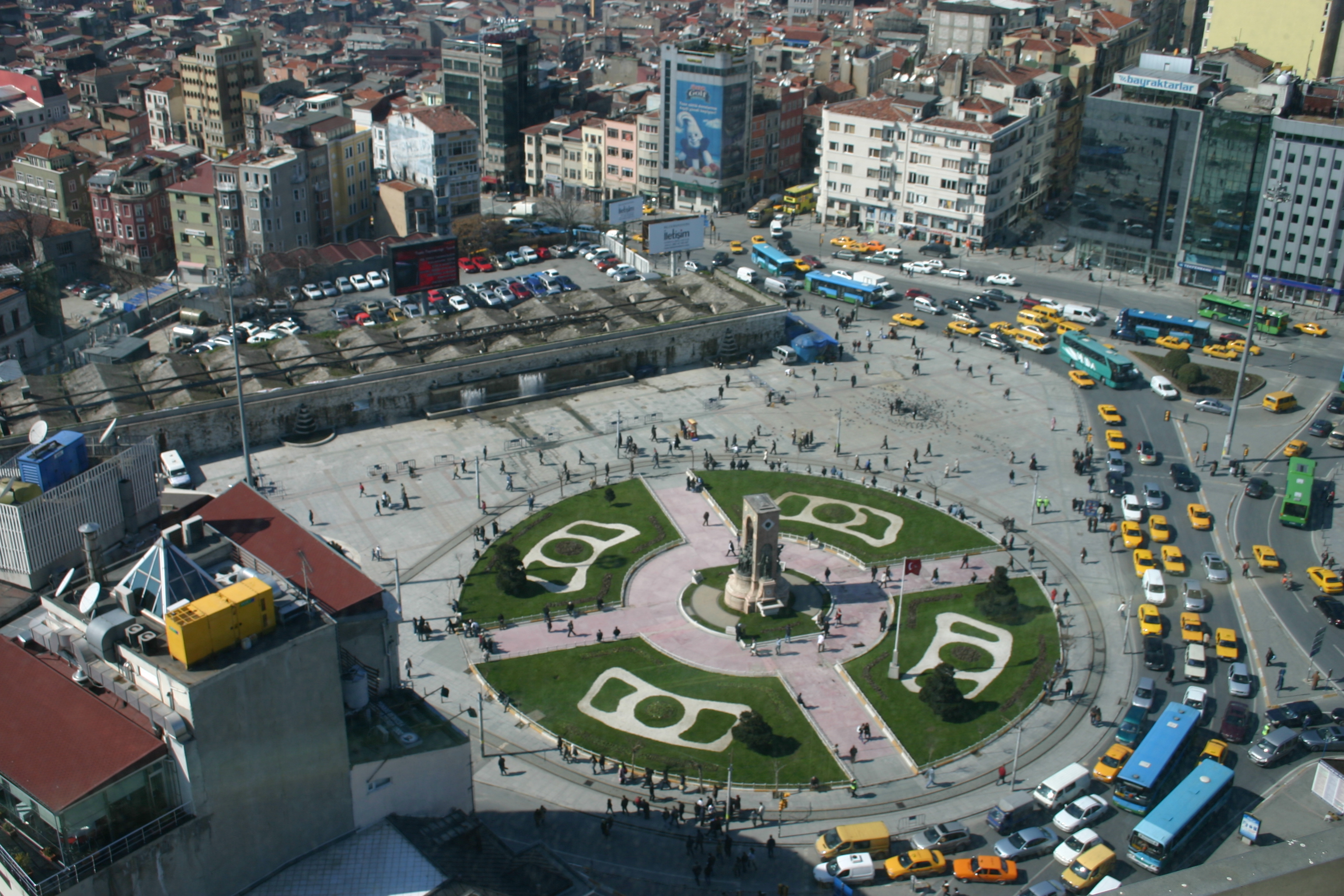
Out last night whooping it up with the young and hip here in Istanbul. Every city has a place where people who can't come up with better plans, converge on New Year's Eve. Here in Istanbul that place is  Taksim Square.  Thousands of people out last night easily. I walked through on my way to a party with some famous Turkish people. Just so we're clear. I had better plans. Of note was how the revelers where wearing Santa Claus caps. It seems that, due to the fact that most folks here are Muslims, there has been a blurring of what symbolises Christmas and New Year's Eve. I can appreciate how this is confusing given that the two events are so close together. Vendors where selling Santa caps that lite up. The drunkest of the guys where wearing them. One was even selling smallish inflatable Santas. Awesome.

One of the biggest stories about Turkey in the last 20 years or so has been economic growth. It’s tough to talk to people about this here as the idea of growth can also somehow be an implicit endorsement for the current government. Touchy subject for many reasons I have yet to completely understand. I may never understand. One obvious area of growth, economic or otherwise was the city of Istanbul. This city has exploded in terms of population. Data I dug up says the population here in 1970 was 3 million. The population now is ball parked at around 16 to 18 million. A huge flow of people just poured into Istanbul mostly in the last 20 or so years. Why? Work. Almost all of the migration is from within Turkey itself though you do see some women coming here from Turkmenistan to play the role that Filipino women play in Canada. What kind of impact does this have on a city? Neighbourhoods have been completely transformed. Virtually all of the living space is in apartments, traffic is breath taking and well the place is a little crowded.


How did this transformation happen so quickly? Imagine this. You own a house with a garden. A developer comes knocking and makes you an offer to build an apartment building on your property. There will be say 16 units. You get to have 4 of them. You may live in one of them and A. sell the other 3 for 200 to 300 thousand Lira each and never work again or B. rent out the other three for 1,200 Lira a month and never work again. Would you take this offer? Or how’s this? You live in a building with 8 units. Same developer comes knocking and wants to build an apartment building with 16 units. The deal requires that you move out for a year or so. During this time they will pay your rent. When the new building is complete, you move back into a brand new apartment that would be bigger and much nicer than the one you once had. Pretty tempting? Obviously, most folks took up these offers. People made money. Lots of it in some cases, by unlocking the value of their property. Many buildings also went up illegally. Three story buildings with running water, electricity and such, but not up to code and built without the city’s blessing. These buildings, if they last longer than a 20 year statute of limitations are also eligible for the sweet deals I mentioned earlier. I know of one man who worked all his life as a janitor. Don’t think about those guys who worked at your high school. These gigs here are very low paying. He happened to live in one of these illegal buildings beyond the 20 year mark and is now the proud owner of 4 units in a brand new building. 

So, suffice it to say, virtually everyone went after these deals when they had the chance and the city boomed under construction and real estate. This of course came with a price. Consider the streets themselves. Once residential, now, still residential but completely lacking the charm that came from a street full of houses. Children are rarely seen on bicycles or skateboards and such. The roads have been completely taken over by cars.

Many of the apartment buildings where not exactly constructed with aesthetics in mind. Most of the designs are virtually identical to the other. Colour choices seem odd as well. From khaki green to hot pink. We are a long long way from the Ottoman villas that used to grace my part of the city. Some still remain. Unfortunately though the city didn’t get around to enacting a law that stated these beautiful wooden villas be preserved in any way until most of the transformation was complete. Its rather strange now, due to this you will find old derelict wooden buildings in certain districts that never got developed and whose cost for a rebuild (you tear it down you need to replace it with something of the same style) exceeds any sort of financial gain you may realize. They lie empty, and for sale. These are people who I guess waited too long and missed out.

Istanbul for many years enjoyed a rather “with it” lifestyle. The British, French, Italians as well as the Germans all established universities or private high schools here. There was a sizable Greek community as well as Armenians. Certain areas where more sophisticated than others of course, but by and large an Istanbul’a was someone that enjoyed the arts, was mostly of a secular mind set, and enjoyed urban pleasantries. There are long standing yacht clubs, opera houses and theatre companies. With these tastes an education is typically also part of the equation.  You smile and say hello to people in the morning. A great deal of this was altered by the massive influx of people over the last 20 years.
  The huge numbers of people that flowed into Istanbul where very different than the natives. Folks from Anatolia, central and eastern Turkey, have their own virtues make no mistake. Having an urban mind set is simply not one of them. By and large they brought with them their more religious values and their more traditional ways. An education, regrettably for many of these more rural communities, stops after elementary school.  If you don’t have an education in Turkey you severly limit your prospects in the field of employment.  Its not to say that wealth can’t happen through some sort of business success, but it likely won’t happen through employment. Many people from these areas, where also the ones that capitalized on the real estate boom and became developers themselves, bringing their deep pockets in from the hinterland, they conquered the big city and made even more money.
  
Let’s try to give this a little context. Consider the city of Toronto. Here is a place that has absorbed immigrants very well. Now consider having, over the course of say a decade, the entire population of Alberta moving into town. In another ten years throw in everyone from British Columbia for good measure. Now this would obviously change the landscape of the city. More condo’s for sure. How about the culture of the place? Wouldn’t that change too??  Would you still like it?  Much of your hometown has now been remade by those who never really had any stake in it and well, are there for the money. Thoughts about aesthetics, communities and such where passing at best. The sheer speed of the transformation was amazing. It can be felt still even now.  The mind set was not one of “city building”.  It appears, unfortunately to have been more about making a quick few bucks. Nothing at all wrong with making money. Particularly if you’re poor.  The impact on the livability of the city was never made priority regretably during the frenzy.


  So, the city you grew up in doesn’t resemble the city you remember, the people are very different from how you are, and of course traffic has become a complete nightmare because the infrastructure simply hasn’t kept up. Imagine a city of 16 million people without a proper subway system. They’re only now getting to actually building one on the Asian side of the Bosphorus. The subway on the European side is remarkable for its cleanliness and how un-crowded it is. It’s brand new at about 5 or 6 years old. People haven’t organized their lives around this sort of public transit yet. There is a tramway that is well used but still has a seemingly small network for a city this size. Istanbul is playing catch up to the people here. Taksim to Suadiye near where I live. With decent traffic levels this trip can take 30 or so minutes. At peak levels, you could be looking at a commute of 1 and a half to 2 hours. This is roughly a 20 kilometer distance.


Traffic is brutal but I must add I absolutely love driving in Istanbul. It allows me the opportunity to be the driver I’ve always wanted to be. Discourteous, aggressive and unencumbered by things such as traffic signs.  Parking is an act in creativity rather than ticket avoidance. There are some rules that guide driving activity. They are in no particular order:

  1. Let the bigger guy win. Especially the Minibüs drivers, those guys are nuts. Pedestrians beware. You are smaller than a car. Cars win. This is very important at the “4 way stop” as we call them in Canada. There is nothing of the kind here. Just take your turn when you can.

2. Get out of the way at all costs. Reaction time cannot afford a check of the blind spot, There simply isn’t time. Don’t worry, the guy in your blind spot expects something to happen.


3. Expect others to be unpredictable, discourteous and dangerous: No one gives way unless they have to. This means getting in their way, cutting them off and such. Work the horn for what its worth. It gets peoples attention most of the time.
  1. Never let the other guy in if you can help it: This is a by-product of being discourteous. If you don’t embrace the mentality, you’ll never get to your destination. If the opportunity is there to cut off the last guy in a line, take it rather than waiting. He’d do the same thing to you.
  1. Traffic signs and lights are merely guidelines, unless there is a camera to catch you. Ever find yourself stuck with a one way street taking you in the wrong direction? All you have to do here is turn around and go the other way. Its okay, no one will honk at you or freak out because you’re going the wrong way. They would expect you to get out of their way should it be tight, but that’s about it. I’ve seen school buses go the other way on a one way street. Its never done for an extended drive. It is faster going the right way down a one way rather than the wrong way after all. This can also apply to highway driving as well. I saw a guy going in the wrong direction on the highway this past summer. It was okay though, he wasn’t going THAT fast, and he had his hazard lights on too. No right turn? Anyone looking? Anyone coming? No? Go for it.


Because driving here through the tough traffic can be such an adventure, a ten minute drive to the bakery can be filled with more excitement than a Toronto driver will see in a week. The Gardiner is for wimps. The 400 for light weights and the 401 for kids on their tricycles. My understanding of other places in the world put Istanbul in say the “upper intermediate” category as far a driving skill level is concerned. I hear that Cairo and India can be very challenging places to drive due to the variable that cattle and other livestock represent. I can only imagine certain locales in South America and China as also being very challenging. Amazingly, I’ve seen very few car accidents on the road. It may appear insane, but it also appears to work. With this in mind I can’t help but have my thoughts wander back to my trip to Calgary in 2008. When viewed in the global context it makes the ever dutiful Calgarian pedestrian waiting at the red light even when there is no traffic coming at all, that much more bizarre.

  I wouldn’t want to wrap up without emphasizing that Istanbul, despite some of the things I have mentioned remains an amazing place. Its by the sea, has excellent restaurants and a night life to envy. You would be forgiven if you confused certain areas of the city for Paris or Madrid. The people can be just as fashionable and sophisticated. The maintenance and care of many of the Ottoman palaces, summer homes and guest houses are excellent and any one of them would put Casa Loma to shame. Huge efforts are underway to play catch up and make the city more livable. A tunnel running underneath the Bosphorus connecting Europe and Asia seems to be sparing no expense. A Third bridge is also being planned. The subway system is only a few years away, and other developments of certain areas of the city are also in the works.  Consider also an economic plan that would bring work to Anatolia. 5 million people would leave Istanbul over night if you could ensure them a decent living in their hometowns. Consider also that Istanbul/Constantinople has had people living here for a couple of thousand years.  20 years of modern history isn’t even a drop in the bucket.

Wednesday, November 4, 2009

Turkish Coffee, Nescafe and Tea.


Back from a trip south. Antalya. One of the prime destinations for sun worshipping Russians. This resort town has become the source of a great deal of folklore for young Turkish men. This is where one of them, or their brother, or their brother’s friend at some point had an encounter with a sexually available Russian girl and told all. These Russian ladies, have an effective stranglehold on the imagination of young Turkish men. Why? They are blonde. They are tall. They wear revealing clothing. Bottom line, they are easier than Turkish women who aren’t usually very tall, typically brunette’s and quite a bit more traditional. At least that’s the story. I have yet to meet a man who has had an encounter with these mythical easy Russian girls. We shall see. This is but one strand of the tangled relationship men and women have here in Turkey. Perhaps it isn’t any less tangled than what goes on in Canada on the surface but it’s certainly different. It’s important to point out though, at their core, Turkish men are just as traditional as the women. This I’ve tested gently. More on this for another time.

The “Fiesta Bar” at the resort we stayed at had an espresso machine. “Jackpot!” I thought! Finally a decent coffee! After dinner we hurried over and ordered 2 cappuccinos. The bartender dutifully proceeded to press the button on the Nescafe automatic coffee machine. That’s right, Nescafe.  It turns out; the espresso machine wasn’t at all in use and hadn’t been used for some time. What gives?

Turks apparently where the first to actually process coffee beans as a drink. We would be going back now 5 or 6 hundred years for that one. Look it up. The person who told me that though said it was due to trade with the Ethiopians. Hard to believe the Ethiopians didn’t show Turks how to drink coffee.  Anyways the Ottoman Empire embraced coffee as their own and when they were subsequently driven out of Vienna they left a few bags of beans behind. From this, the Vienna coffee house was born. Turks are partly responsible for the current popularity of the drink no doubt. It just isn’t that popular with them.
Surprised? I was. Turkish coffee heated in a pot (traditionally over coals) then served in tiny cups and sipped in small doses is easily found and widely available. “The Café” as a Canadian would know it, is in fact a very recent fixture on the Turkish scene. Starbucks arrived on Turkish shores, specifically Istanbul in 2002 and have largely been responsible for the sprouting of local chains in response. Say what you like about Starbucks, they effectively raised the stakes on coffee here in Turkey. Filtered coffee, as it’s called here, was an unknown quantity and remains so for most folks. I served some at a breakfast I hosted recently and was asked “can I put milk in it??”A guest was also worried I wouldn’t have Nescafe. Yes Nescafe.

Turkey was a closed economy until the mid 1980’s. What exactly did this mean?? Things foreign where not allowed in. Domestic industrial development was favoured. Those of us old enough to recall the Cold War will remember a time when stories about arriving in the Soviet Union with blue jeans would make you a hero in the eyes of a local. I went to Cuba and gave some perfume samples to my tour operator who may have been made the happiest woman in the world by this simple gesture. This was effectively the state of things in Turkey for some time where a great pleasure was an innocent pleasure. Nescafe somehow, elevated itself to one such commodity where it was smuggled into the country, kept under the counter and sold with a whisper for three times the price.  When the economic reforms finally took hold and Nescafe was on the shelves legitimately the damage was done. Nescafe had successfully captured a space in the Turkish imagination just like those Russian girls vacationing in Antalya. Nescafe, or Nestle managed to effectively market it for the refined     taste. People bought in. The stuff initially wasn’t cheap either and had the cachet of being from away. You want to be ordinary, have a traditional Turkish coffee. You want to stand out, offer your guests Nescafe.

Interesting when a culture some how convinces itself something awful is actually something good. Canadians know a thing or two about this. The Nescafe phenomenon here in Turkey reminded me completely of Tim Horton’s. How did Tim Horton’s become viewed as the provider of an exceptional cup of coffee? Once, 7 years ago, I said out loud in front of other people that I didn’t like Diana Krall. Oh The looks on their faces! I never got invited to their parties again. Maybe things are just good because so many people say they're good.  A friend of mine said a few years back  ”people like things that are shit. Just look at how long M*A*S*H was on T.V. “ Indeed. Chacun à son goût.


Tea is unquestionably King and absolutely something no Turk would do without. Turks drink an amazing amount of tea. It can be bought just about anywhere and is consumed with or after every meal. Street vendors and truck drivers have portable propane burners so they can prepare tea while on the job. Sit on a park bench in Istanbul and you can be approached and sold a glass of tea. There are tea gardens “Çay Baçhesi” places built just for serving tea and socializing. Many of them are situated near the sea or other places with beautiful views. Pastry shops have historically occupied the role of café but served tea instead. They are still all over town. (One pleasant surprise has been what excellent bakers Turks are.) I have yet to pay more than 1.50 Lira for a glass of tea which means the drink remains widely accessible for just about everyone. 

Brewing tea here is quite different than what Canadians would be accustomed to. Milk is never served and not even thought about. Tea here is about colour and strength. To prepare a proper Turkish tea one requires a double boiler teapot. The bottom pot bears the hot water, the top the brewed tea. It is usually kept on the stove to stay hot. The brewed tea is remarkably strong by itself. 4 tea bags where used in a smallish pot in four fingers of water for 5 people. To serve, pour a small amount of brewed tea in the bottom of the glass (almost always glass. How else to judge strength and quality?) Then add the hot water from the other pot to adjust strength. A host will come to the table with both pots in hand and serve accordingly. It is entirely appropriate to send tea back in a restaurant that is too dark for your tastes or too light. You know you’ve got a lazy host and a crappy glass of tea if it’s cloudy. This means, rather than bothering to brew more tea, your host has simply added water to the already used tea leaves. Very bad form! It is also quite important to change the glass after multiple uses. It gets smudged after all.  Tea glasses tend to be smaller than in Canada. The idea behind that is your tea doesn’t have a chance to get cold with smaller servings. Good restaurants don’t charge for tea after a meal. If they do it costs them in the tip. Sugar cubes almost always accompany a glass of tea. I’ve seen people drop three cubes into one little glass.  Some places, Like Konya in Anatolia, produce very hard sugar. The people there are known to keep a piece of sugar inside their cheek while they sip tea that will melt the sugar slowly.

Coffee will be second banana to tea for the foreseeable future.  That being said, the Starbucks on Baghdad Street has been recognized as one of the top grossing stores in all of the Starbucks Empire. The place is huge and packed all the time. Other local chains are also able to boast similar success. The café is hot right now in Istanbul. They are a good fit for a city full of young people and the long patio season. The nightlife has a killer vibe because of them.

My favourite story about Turkish coffee is the role it can play in a traditional marriage proposal. When a man wishes to marry a woman, its expected that he go to the family and ask the father for the young woman’s hand.  The family sits together at the table with the suitor and the would-be bride serves Turkish coffee. If the suitor’s coffee is salty, he knows he’s got no chance and is spared the embarrassment of getting shot down. If his coffee is sweet, he’s in.


Wednesday, October 14, 2009

Cleanliness is next to Turkishness.


Back at last! A short trip back to Canada to square away my work visa (what IS the matter with Ottawa anyways???) and now one week of classes under my belt at a brand new Istanbul University. I am now Mr. Roy to some aspiring Mariners who need to learn how to speak English. This teaching gig will be a veritable gold mine of material for a blog. Turkish boys 17 to 24. Trust me, they are not men. Nor are they Devo. They are boys. Now on to more pressing matters. This business of hygiene.


   We in Canada have been guilty of passing judgment on those Europeans for being, lets say, relaxed about their personal hygiene. The pecking order usually involves the English being the worst of the bunch (ah heck lets throw the Scots in too) particularly for their low priority placed on dental care. The French wear perfume so as to not reveal their stench, and no one seems to shave their armpits. Turks are no different. We in the West (yes they view themselves as not in the West) are not bad. There are some serious areas for improvement, but for the most part not as bad as others. Other areas of the world are viewed much less charitably. Lets just leave it at that.


What of these areas for improvement then?? Where do these Turks get off thinking us squeaky-clean Canadian’s are not as clean as them?? Well, I have to say, they most definitely have us on one front and it all begins with the toilet.
“The toilet? You mean those Turkish toilets I read about in my ‘Let’s Go Europe’ book?” Not exactly. Those same toilets are still up and running. You never know when you’re gonna run into them. It’s pretty much luck of the draw. I feel though that everyone should use them at least once. It’s character building.Usually, there is a little tap down next to where you are squatting that has a little bucket with it. You may pour water from the tap then splash away from the bucket in the hope that you will take care of what toilet paper normally does. If you’re lucky, some even have toilet paper. These “ à la türque” toilets are slowly vanishing . Turks of my generation cannot fathom how the older generation ever coped with them. No modern times mean modern toilets. Just like ours in Canada, except for an ever so simple enhancement.

This could be one of the greatest contributions to global bathroom practices ever introduced! Its beauty lies in its simplicity and its universality. A small hose (some more upscale types have it built into the porcelain) is attached to the toilet and the tap for it is just to the side of the bowl. Once you’ve made your effort, simply turn the tap on and a blast of water cleans the starfish for you. Toilet paper is now used for drying mostly. The feeling is one of refreshment. Your backdoor is clean! I don't care if it costs thousands of dollars, I'm having this installed in home home back in Toronto.
 Every household has this built into their toilet. Every restaurant bathroom. Everywhere. Imagine then growing up with this and learning that they over there in the West DON”T wash their asses after they go? What are they?? Animals??What else do they not do?? It turns out, plenty!Turkish men shave their armpits. I am told, that they are inspected once a week, (the armpit hairs) during their mandatory military service to ensure they are not getting too long. The practice then is maintained back in civilian life. The cleanliness benefits I’m not so sure about but I do understand that it takes care of additional odor. The cab driver I had the other day discounts that theory but then again it was hot out. So imagine if you will, the hairiest gorilla of a man (like the guy I saw at the gym today!) that you’ve seen this past summer. Back, chest, arms. Dark curly hair and lots of it.  Now think about how a man such as this would actually bother to shave his armpits. Someone I know asked if the armpit hair grew down to my legs not knowing that it stops at some point. I am also told, that it doesn’t just stop at the armpit hair. I can only rely on hearsay because given certain customs of modesty, Turkish men change at the gym with towels wrapped around themselves. Its just like Grade 8 Gym class all over again. There was that one guy who was too shy because he hadn't "matured" as quickly as the other guys. To hide his shame, he would find a quiet corner and wrap up in Star Wars towel his mom bought him. Then change. All men are like that here. 


It is absolutely unfathomable to ever wear your outdoor shoes in a Turkish person's home. No no, you'd be offered slippers immediately when you arrived. Every home has slippers for guests. I visited a home on the Black Sea the other day that had slipper for the patio. You'd then enter the home without foot wear at all. (The house by the way was absolutely spotless.) This caution around outside kooties is taken to new heights with the machine that wraps your shoes up in plastic at the gym. Insert foot into plastic and wham-o! Instant foot wrap so that you don't soil the floor with the unmentionable things you must have walked in in the 10 paces it takes you to get to the change room. My daughter's school is the same way. If you need to walk up the stairs, please wrap your feet in these plastic do dads.

Yeah I'd say they are over all a cleaner bunch here. They're certainly more fussed about things than your average Canadian. I'll be sure to point out other items as we go along.  Canadians still come out number 1 for dental hygiene though. Turks take in tremendous amounts of sugar daily through tea consumption. Unless that changes, Canadians may not wash our asses but we have better smiles!


Thursday, September 24, 2009

Turkey. The Undiscovered Country.

Ah! Here I am! a blog of my very own! Perhaps my writing will be viewed as something so extra ordinarily gifted that I'll win an award or something. Or perhaps not. In any case, friends have encouraged me to chronicle my experiences here in Istanbul over the next 10 months and the very human need to share and externalize has finally bubbled to the surface.

I choose then to begin with the beginning. I am in Turkey. Istanbul her largest city. On the Asian Side. From here then I would like to dispel all of the most common misunderstandings about this place that I've encountered from people prior to my arrival. This may be one of the least understood countries in the world for Canadians. History of this place is not really taught in schools and regrettably, the most exposure anyone has had of this place was through that movie "Midnight Express". From there people have filled in the blanks with assumptions and guesses to allocate Turkey a place in their mind should mention of it ever come up. Well time to fix just a few things...

1. Turkey is NOT an Arab country: Though there is a shared history through the Ottoman Empire and some cultural and linguistic spill over as a result, Turks are not Arabs. To suggest otherwise to a Turk could result in a heated reprimand. The opposite is also true. Turks are Turks. They speak Turkish.

2. Turkey is a safe country: With the exception of separatist activity in the Kurdish region(more on this issue later), this is by and large a safe place to visit. I would also highly recommend being on high alert as you cross the street in a land where the car always has the right of way and the drivers are basically insane by Canadian standards.

3. Turkey is a secular country: The religion of the majority is Islam. You can hear the Ezan (call to prayer) from Mosques all over town, you can see women covered head to toe just as easily as see one in a mini skirt, people fast during Ramaddan and they don't fast. It's up to them. Most folks go out and visit relatives during Bayram how most Canadians see family at Christmas. The country though is officially secular. Its in the constitution put into place by the modern republics' founder Attaturk. This is definitely not Saudi Arabia. One can order a drink in a restaurant and buy alcohol at the corner store. In this respect Turkey is actually more liberal than many parts of Canada.

4. Turkish people are NOT mean: What can I say?? Turkey certainly has her share of thieves and tricksters and yes maybe you should be a little more careful on where you place your wallet when you head out to Taksim, but Turks are a very warm people. Hospitality is central to how they view themselves and I have to say I feel as though I've been warmly embraced by most of the people I've met here. Turks (at least in the part of Istanbul where I live) do not get too much contact with foreigners, so when the opportunity presents itself, they become very gracious. They seem to seize most chances to speak English and will always try it out if they have any to share.

5. Turkey is fun! : The beaches here are awesome, the food is fantastic and it is easily 1/3 cheaper than Greece.

Turkey is a pretty complicated country. Its nothing like say Finland where everyone is Finnish and thats that. There are a multitude of layers that make up Turkish identity which I'm still trying to understanding. In many ways it is just as modern as any other Western country and in other ways it is well, not Western. Maybe not even modern. What's clear though it is still in its early days. Seems an odd thing to say for a country and a people with thousands of years of history behind them, but modern Turkey has only really existed since the 1920's. The Turkish experience with democracy has been..well...unique, and reconciling with her nieghbours, like Armenia for example, hasn't really been an option until the early 1990's as a result of the collapse of the Soviet Union. All these things are about to change it.

My hope is to share with you as best I can antidotes about my stay here as well as focus in on some of the quirky differences I've encountered. My next post will be about hygiene. Yes hygiene. Trust me, you'll find it quite compelling.

Thanks for reading!

David